
Why we price flat by vehicle class instead of "starting at"
A price that changes once someone is standing next to your car is not really a price. It is an opening offer.
September 25, 2026 · 5 min read · Pricing
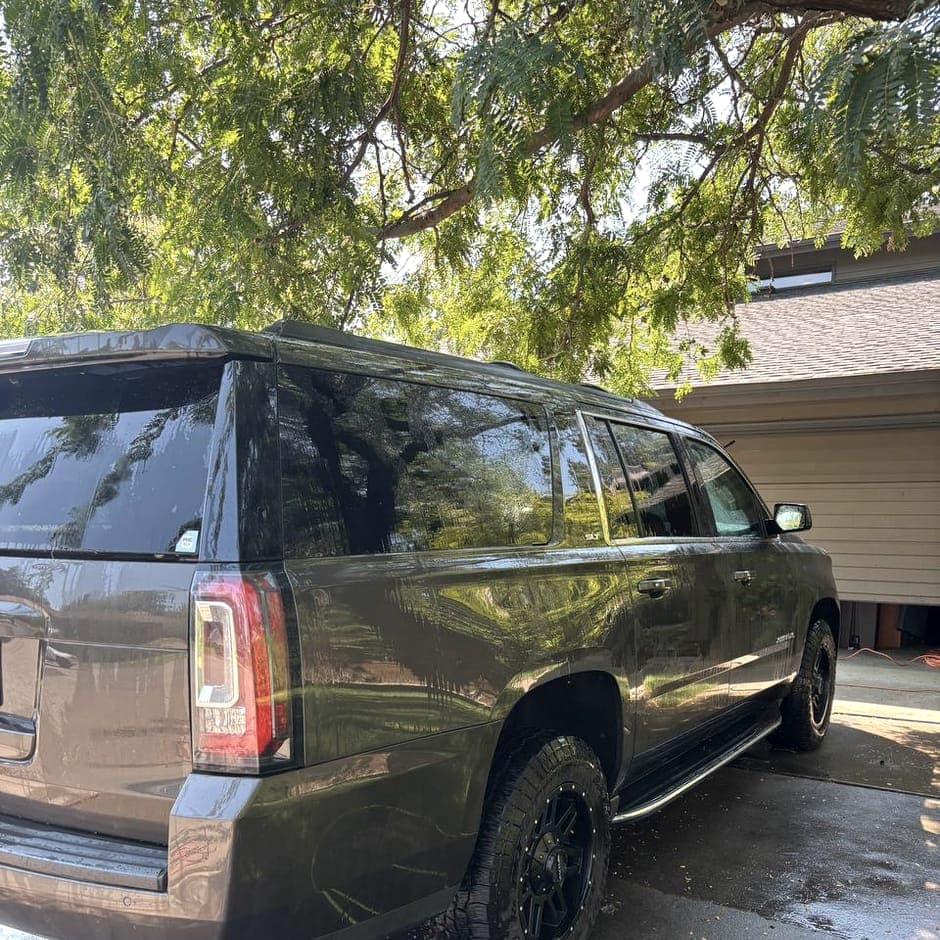
What "starting at" usually means
Search for detailing anywhere in the Portland metro and most listings lead with a low number: interior detail starting at ninety nine dollars, full detail from one fifty. That number is real in the sense that someone, at some point, paid it. It is also almost never the number you will pay.
The starting price is built to get the phone to ring. What actually gets charged depends on a walk-around once the technician arrives: vehicle size, condition, sometimes even the trim level. None of that is dishonest by itself, but it puts the real number in the hands of whoever is standing in your driveway, after you have already committed to the appointment.
Our actual prices
We do it the other way. Interior and exterior are priced by vehicle class, with a flat number for each, not a range and not a floor.
- Sedan & Wagon: Interior $150, Exterior $100, both together $220
- SUV & Crossover: Interior $250, Exterior $100, both together $320
- Minivan, Van & Pickup: Interior $300, Exterior $150, both together $420
These are the same numbers that appear on our packages page. There is no lower tier we quote first and a higher one we upsell into.
Why vehicle size is the fair axis
Size is not a proxy for how much we think you can afford. It is a proxy for how much cabin there is to extract, how many square feet of paint there are to wash, and how long that honestly takes. A three-row SUV has roughly twice the interior surface area of a compact sedan, and it takes roughly twice as long to do properly.
Pricing by class means two customers with the same car pay the same price, regardless of what else is parked in the driveway. That is a small thing, but it is the difference between a price list and a negotiation.
What a walk-around price actually risks
There is a reason so many businesses quote a low number over the phone and a higher one in person. Once a technician is standing in your driveway with a vacuum already plugged in, you are not really in a position to negotiate or walk away. The sunk cost of having someone show up does most of the work for them, and "that will be more than we said" lands very differently once a van is parked on your street than it would in a phone call.
Quoting from photos and a description before anyone drives out removes that leverage entirely. If a price does not work for you, you find out before a vehicle is on-site, not after.
The one variable that is still honest
Condition is the exception, and we are upfront about it rather than pretending it does not exist. A sedan with light everyday wear and a sedan with two years of a shedding dog living in the back seat are technically the same vehicle class, and they are not remotely the same amount of work.
The difference is that we ask about condition before the visit, through a photo and a few sentences about what is going on, rather than discovering it once the vacuum is already running. If a job genuinely needs more time than the class price assumes, you hear that number before you book, not after the car is half done.
The bundle discount is not a discount trick
Booking interior and exterior together on the same visit saves you a flat amount, not a percentage that sounds bigger than it is. That reflects something real: one setup, one trip, one block of time on our schedule instead of two. We are not inflating a separate price just to make the bundle look generous by comparison.
If you only want one service, the single-service price is the same number whether or not you ever book the other one. Nothing is quietly marked up to manufacture a discount later.
What happens if your vehicle does not fit neatly
Most cars sort cleanly into one of the three classes. A few do not: a cargo van set up for work, a truck with a full crew cab and a topper, an SUV closer in size to a small van than a crossover. When that happens, we ask rather than guess. Tell us the make, model and trim when you reach out, and we will tell you plainly which class it falls into and why, before you book.
How this compares to other pricing models in the industry
A subscription car wash membership is priced by month, not by job, which works well for a quick exterior rinse but does not translate to interior extraction or furniture work that varies enormously visit to visit. Some shops price by the hour, which is honest in its own way but makes it impossible to know the total before the work is finished, and gives no incentive to work efficiently. The tiered good, better, best package model, which is common in this industry, often nudges people toward the middle or top tier by making the base tier look deliberately thin.
Flat pricing by vehicle class sits apart from all three. It is not a subscription, so there is no commitment beyond the job in front of you. It is not hourly, so the number is fixed before we start. And there is no thin bottom tier designed to be upgraded away from. You see three numbers for your vehicle class and pick what you need.
Why furniture is not priced the same way
If flat pricing by class works so well for vehicles, it is worth explaining why furniture and upholstery cleaning does not get the same treatment. The reason is not inconsistency. It is that vehicle size predicts labor fairly reliably, a sedan is a sedan, but furniture condition varies far more within a single category than vehicle condition typically does. A loveseat and a ten-foot sectional are both "a sofa," and a fabric piece with a fresh spill and one with years of set-in staining are both "used furniture," yet the labor gap between those pairs is enormous.
Forcing furniture into a flat class system would either overcharge the easy jobs or undercharge the hard ones. So cars get a size-based flat rate because size is the variable that actually matters, and furniture gets a photo-based quote because condition and piece count are the variables that actually matter there. Same honesty, applied to two different problems.
The honest tradeoff
Flat pricing by class means we do not get to advertise a headline number as low as a shop that quotes a stripped-down teaser price and upsells everything else. What it means instead is that the number you see is the number on the invoice, as long as the condition matches what you told us.
That honesty runs both directions. The same reason our prices are fixed and public is the same reason we ask you to provide water and power at the address rather than hide that requirement until the day of the appointment. Straightforward pricing and straightforward logistics come from the same habit.