
Why your black car never looks black
That haze under a streetlight is not the color of the paint. It is thousands of fine scratches, and almost all of them came from washing.
September 3, 2026 · 2 min read · Paint
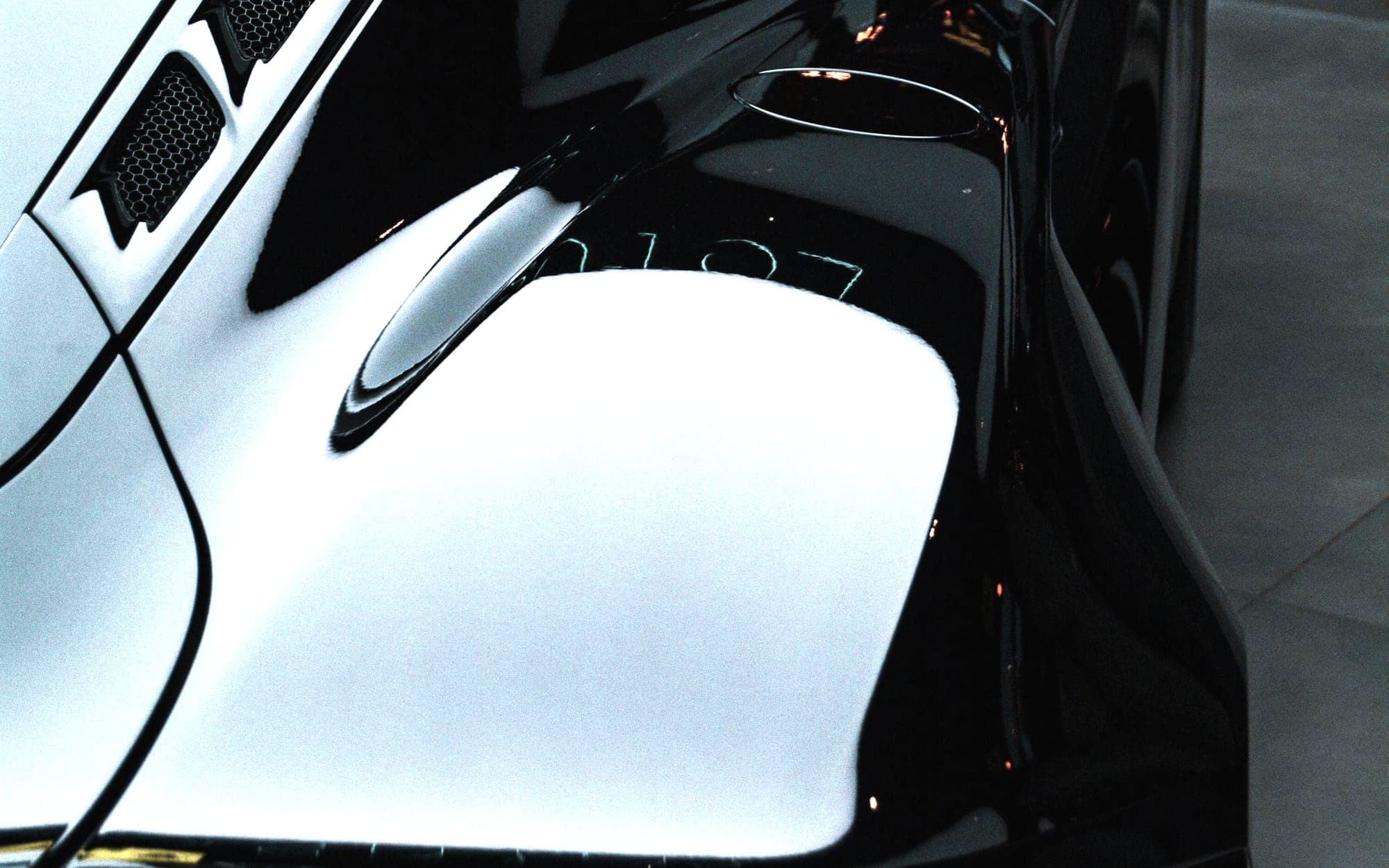
What you are actually looking at
Park a dark car under a single light source, a streetlight or a low sun, and the reflection will not be a clean shape. It will sit inside a soft halo of fine circular scratches.
Those scratches live in the clear coat, the transparent layer over the color. Each one catches the light and throws it in a slightly different direction, so a reflection that should be sharp gets scattered into a gray haze. That is why the color reads flat.
Where they come from
Almost none of it is the road. The overwhelming majority of swirl marks are put into paint by cleaning it.
- Automatic brush washes, which drag grit from the previous car across your panels
- A wash mitt dropped on the driveway and picked back up
- Washing with one bucket, so every dunk returns the dirt to the paint
- Drying with a towel that has been through a machine with fabric softener
- Wiping dust off a dry car, which is grinding sand across clear coat
This is why a careful hand wash is a protective process before it is a cleaning process.
Why dark colors suffer
The scratches are there on a silver car too. They are just invisible, because a light metallic surface already scatters light in every direction, so a bit more scattering changes nothing you can see.
Dark paint works by reflecting cleanly. Anything that disturbs that reflection is immediately obvious. It is the same reason black cars look spectacular when corrected and mediocre when neglected.
What removes them
Only one thing genuinely removes a swirl mark: taking the clear coat down to the depth of the scratch with an abrasive polish. That is paint correction, and it is permanent in both directions, because the clear coat does not grow back.
The alternative you will be offered is filling. Glazes and filler-heavy polishes drop oils into the scratches so they stop scattering light. It looks excellent, and it washes out in about six weeks.
Keeping them from coming back
Correction resets the paint. What happens next is entirely about how the car gets washed.
Two buckets with grit guards, fresh media for each panel section, no automatic brushes, and never wiping a dry car. Protection helps by making contamination release more easily, so less pressure is needed in the first place.